This post will be talking about events from the recent HBO series A Knight of the Seven Kingdoms and the novella it was adapted from: The Hedge Knight.
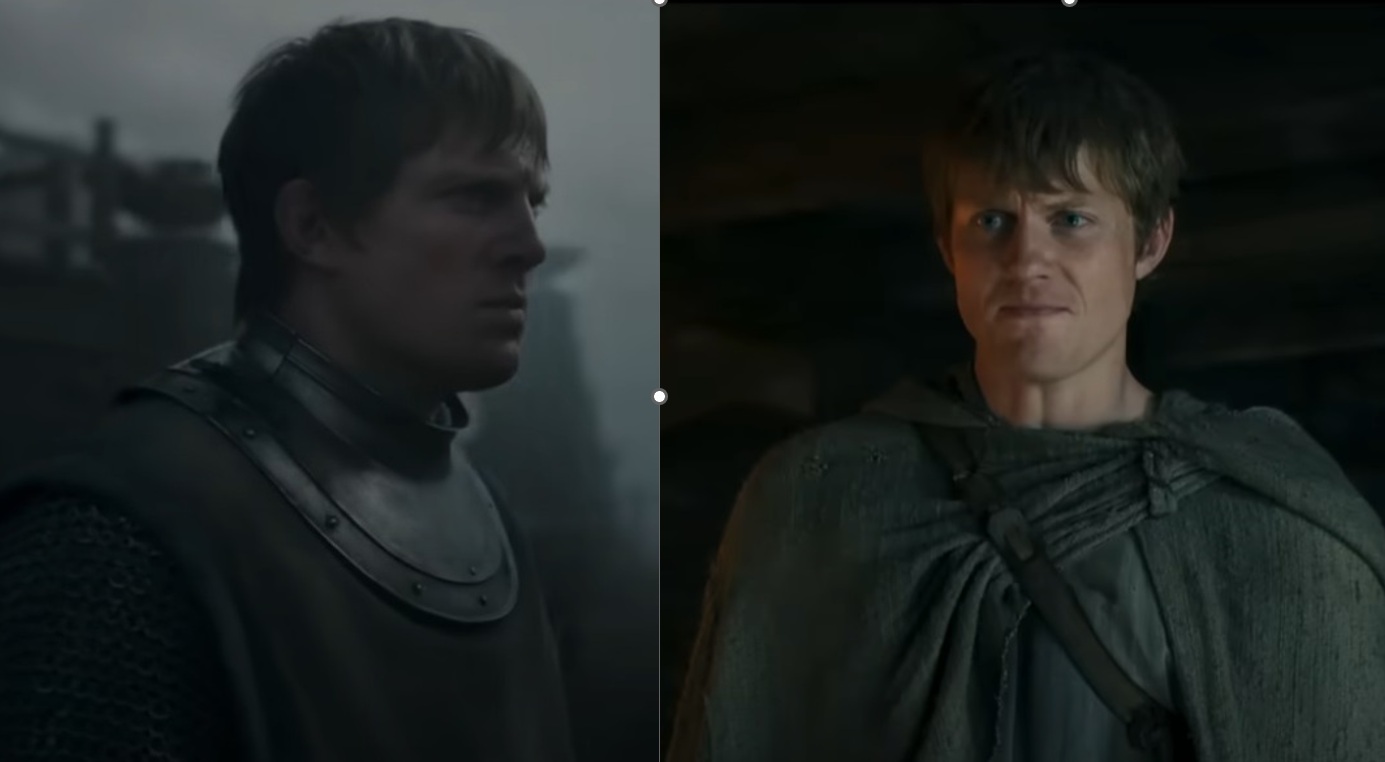
I encourage anyone reading this who aren’t aware of the source material to read this post no further, as I will be discussing plot points and honestly, why be spoiled? Just get caught up and then come back.
I’m glad that you are still reading.
Okay, the core of the article will be based on a long debated question “did Ser Arlyn of Pennytree actually knight his squire Dunk, or has Dunk been pretending that he legitimately has the status of knighthood, so he can have better employment opportunities?”
This post is not going to present evidence one way or the other, as this is a long and well-debated topic among A Song of Ice and Fire fans and I don’t necessarily want to rehash that.
On a personal note, my dad is convinced that Dunk was appropriately knighted and that Dunk is being honest about being a knight, since the amiable hedge knight seems like such a stand-up guy that my dad feels that Duncan would never lie.
I, on the other hand, believe that Dunk was never knighted, and I don’t hold his trying to hustle his way through Westeros against him. My gentle giant is just trying to avoid starvation or a life of banditry.
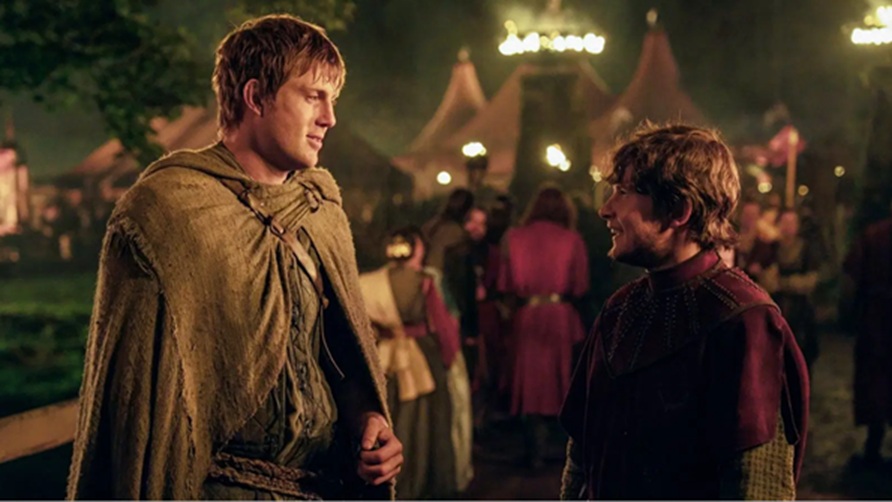
Squire Raymun: Are you hungry?
Dunk: Always.
— A Knight of the Seven Kingdoms, episode 1 “The Hedge Knight”
The show went out of its way to explicitly avoid answering the question of Dunk’s status, although it clearly seemed to lean one way, even to the point where the show nearly confirmed that Ser Arlyn had died without knighting Dunk, making us believe that Ser Arlyn had died mid-story but then revealing that Arlyn was not yet dead.
The issue of Dunk possibly pretending to be a knight does surface at times – either explicitly when Dunk is being interrogated by Plummer the tourney officiant, or implicitly with Dunk suggesting that the gods were punishing him for not knowing his place, or when Lyonel Baratheon suggested that the gods don’t favor a fraud and Dunk’s response is “then why have they favored me?”
The show definitely wants us to ask that question.
Does It Matter?
Despite how one’s opinion might fall on the topic of if Dunk is legitimately a knight, I think all might agree that Dunk possesses the chivalrous attributes we expect to see in the idea of knighthood (and are rarely found in reality.)
So, does it matter if Dunk was actually knighted or not? In practical terms (if we assume I’m correct and Arlyn died without knighting his squire) his legitimacy or lack thereof doesn’t change the story.
- Baelor still vouches for Dunk because of his association with Ser Arlyn.
- Dunk still gets to employ the knightly defense of Trial by Combat in response to Aerion’s charges.
- Baelor still agrees to be Dunk’s seventh because he believes Dunk is a knight who remembered his vow to protect the innocent – which inspired Baelor to remember his vows.
The story plays out regardless if Dunk was knighted by Ser Arlyn or not.
Except, it would matter to Dunk if he had been knighted or not.
Once Baelor vouched for Dunk, as far as anyone was concerned he was a knight who can join the tourney, but internally he would know that he was an imposter seeking rights above his station, which in theory would feed into his self-recriminations before the fight and compound the guilt he felt over Baelor’s death.
If he’s truly a knight, his defending Tanselle against Aerion is justified. His cause was just and him getting six companions to face the accusers is something he’s owed by virtue of chivalry. If he’s not a knight, his attacking Aerion – even if he was defending Tanselle – was going to doom him with little recourse.
It is all much more meaningful if it is a sham, because it highlights that the feudal society rules are suboptimal. By society’s rules, the norm would be for Dunk to be punished, which is wildly unfair.
Dunk the man deserves as much justice as Ser Duncan the knight does.
And, the gods agree.

Okay, I’m not saying the seven-part god(s) of the Faith of the Seven are real in the books. There is definitely magic and supernatural things happening, but none of that seems to be actual manifestations from the Father, Mother, Warrior, Smith, Maid, Crone, or Stranger.
The Stranger: Well, I definitely think that I’m a real thing. All men must die.
Jaqen H’ghar: A man agrees.
But the regular folks of Westeros seem to have a belief in their region’s respective deities. Most of the nobles don’t seem quite keen to push against the divine. We see religious zeal throughout the various shows, even if we don’t see direct evidence of the gods.
So Dunk’s victory as a commoner over a noble accuser in a contest where he should be disqualified from from the very start, one that is a direct appeal to the gods for their favor, seems much more important to me within the in-universe cosmology than if everything was happening in accordance to the social norms that the small folk are not allowed to make appeals to the gods to judge their innocence, but knights and lords can.
If the gods were real and judging Dunk as a fraud, he should lose. If the gods were real and Dunk’s cause was just, he should win.
Imagine the shock it would bring to a septon taking Ser Duncan’s confession (if septons take confessions like Catholic priests) where Dunk revealed the truth. What would the septon think of his gods favoring smallfolk Dunk in the Trial of Seven, a trial reserved for knights and lords? Would it lead them to understand that justice is something that should be made available to the smallfolk, and not just the nobility?
It is not quite as meaningful for Dunk to win simply as a knight; it is more meaningful for Dunk to win as someone who extols the virtues of being a knight, while not having had the official trappings. It seems unfair that Dunk was never knighted, and so he deserves our respect even more.
This tracks closely to a fan favorite from the main series A Song of Ice and Fire (and its TV adaptation Game of Thrones.)
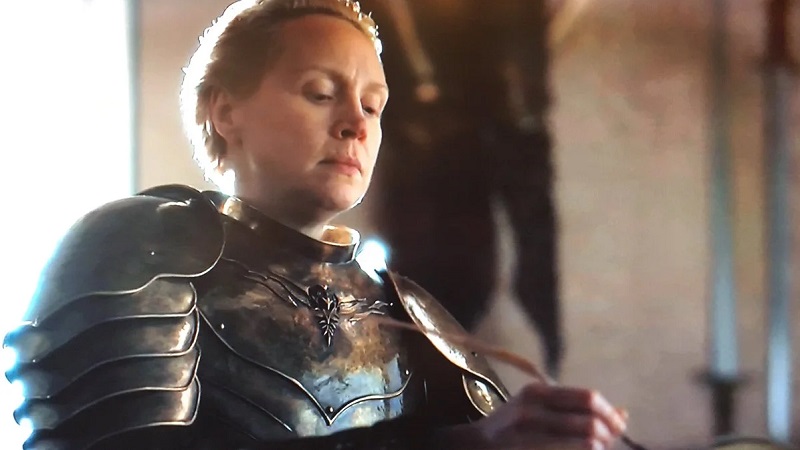
Brienne of Tarth is a knight in every sense except having been knighted. On the show, Ser Jaime Lannister breaks boys-only traditions and knights Brienne, and its a big deal because she’d earned this by behaving heroically and chivalrously, in accordance for what the romantic notion of knighthood entails.
Similarly, I feel Dunk is a knight, not because Ser Arlyn said any words over him, but because Ser Duncan knights himself from his actions.
This post isn’t here to try and change minds. If it is important to you that Dunk from Fleabottom was knighted before Ser Aryln passed on, I have to respect that. The question is unanswered for a reason – George RR Martin could make it clear one way or the other, but has chosen not to.
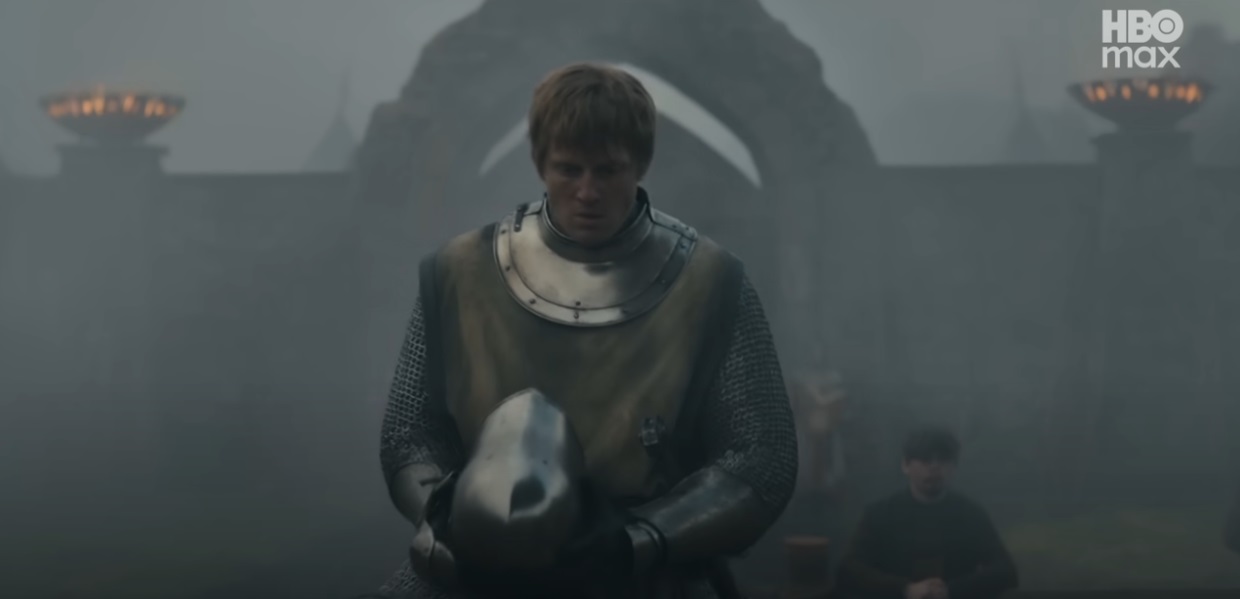
But for me, it’s more important that Ser Duncan was never knighted but follows the knightly vows.
(Comments are always welcome. Super welcome! But if you want to talk spoilery Game of Thrones talk with me (also welcome) I’d invite you to visit my Safe Spoilers page on my backup blog. That way my non-book-reading friends won’t be shocked with foreknowledge.)
Images are from HBO’s A Knight of the Seven Kingdoms and Game of Thrones (obviously). I make no claim to any of the images, but some claims to the text. So there.
If you liked this article, thank you! I have all of my Game of Thrones related articles on my handy-dandy Game of Thrones page should you want to read more but don’t want to navigate around my site.
© Patrick Sponaugle 2026 Some Rights Reserved
 I Can't Possibly Be Wrong All the Time
Papa Sponaugle’s gotta get with the program: Dunk was NEVER knighted! 🙂
LikeLiked by 1 person
I agree with you! Many people are saying this!
LikeLike