International Batman Day for 2024 occurred on September 21st – I was too late to get something written up for it. (But maybe me posting this just a bit over a week late will be okay.)

I started writing blog posts about Batman, to celebrate International Batman Day, back in 2015. (How the time flies!) I was pretty consistent – I followed up in 2016, 2017, 2018, and 2019. I had established a tradition, or so I’d thought.
Then 2020 happened, and I think I just had a hard time for awhile. I’m not making excuses: Septembers just came and went and I’d forgotten about International Batman Day. That’s on me.
There was still Bat-Content to consume during those years, so again, I really had no excuse. Time to make up for some of that.
Batman, 2022
The Caped Crusader returned to theaters in 2022 (during the pandemic but at least we were vaccinated by this time) with director Matt Reeves’ Batman.
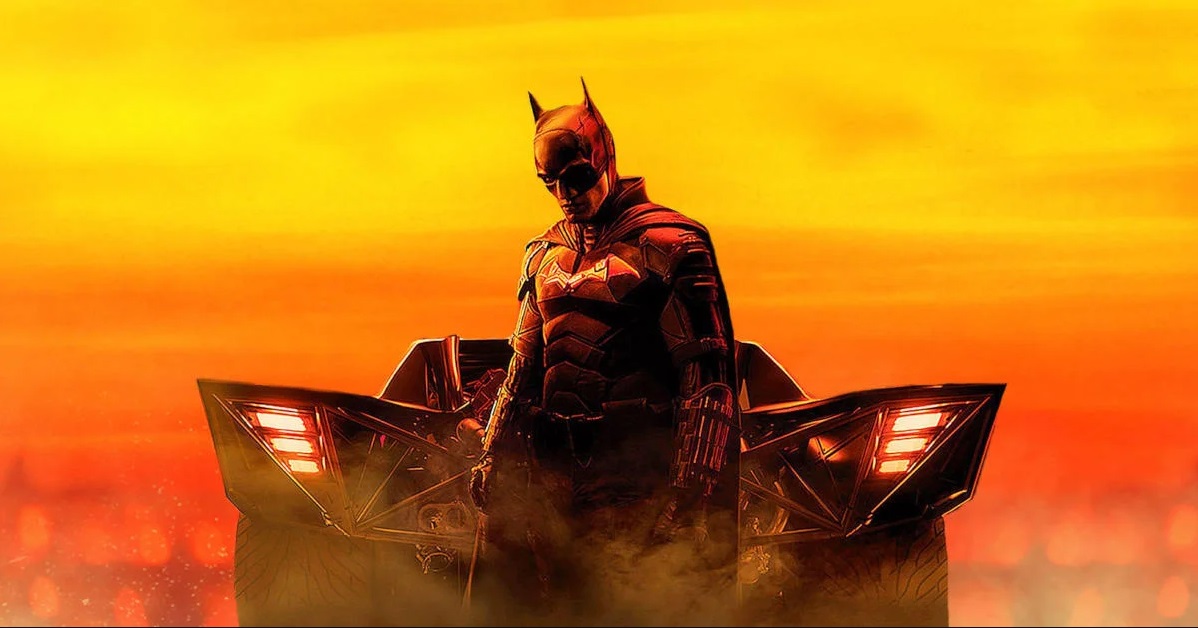
I wish I had written about the movie in that year. It came out in March 2022, so I had a solid six months to work up something for the following September. I just didn’t.
The movie had elements that I like in my Batman content and elements that I don’t like. I’m not a fan of an armored-up Batman, and particularly not a bulletproof Batman. There’s an excellent scene where Batman attacks some goons in a darkened hallway who were hoping to ambush him coming out of an elevator.
It’s a well-shot, exciting scene, but it includes Batman just walking through a hail of gunfire near the end of the clip. In the beginning of the action sequence, I could buy into the idea that bullets were flying but he was just not getting shot (a comics-accurate situation) but when he’s standing there, bullets bouncing off him like he’s Superman, it raises the question of why didn’t he just stroll out of the elevator in the first place? He’s bulletproof.
But the movie did so many things that I did like. I appreciate a Batman movie that has a serious tone, rather than a campy one. (I make exceptions for the 1960’s Batman TV show, which of course was perfect in its own way.) Christopher Nolan’s Dark Knight movies with Christian Bale established a framework of something approaching realism in the mostly unrealistic world of costumed billionaire vigilantes and performance-art criminals. The 2022 Batman was in that mold.
Point in its favor: it had the feel of a noir detective story, focusing on Batman engaging in trying to hunt down a serial killer (who goes on to become a stochastic terrorist – another well-established Batman trope.) Rather than just playing lip-service to him being the World’s Greatest Detective, we get to see an investigative process being worked through, with Jeffrey Wright’s Commissioner Gordon being the Watson to Batman’s Holmes, as they pursued the Riddler.
I’ll hold off on more thoughts about the 2022 Batman, and save them for another International Batman Day post. There’s certainly things to talk about, but I’ll close (this section) on noting that the movie introduced Colin Farrell as the Penguin. Here, he’s not necessarily (yet) one of Batman’s Rogue’s Gallery cast of characters, but presented as a mid-level figure among Gotham’s organized crime element.
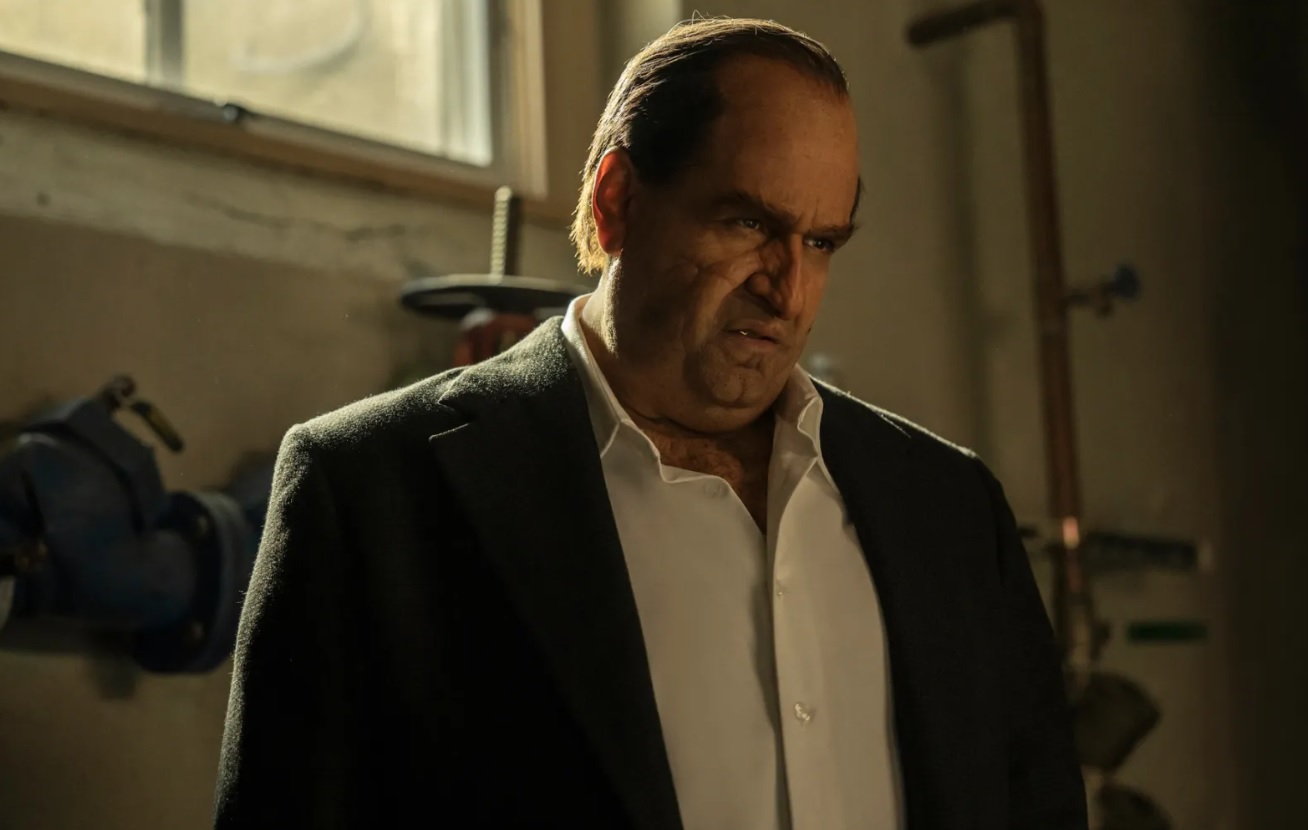
I’ll share more thoughts on Farrell’s Penguin (good ones) in its own section below, but now for something a bit different.
Harley Quinn
Probably the best-realized Batman content that came out during my dry spell of writing about Batman was the animated Harley Quinn show – it came out in 2019, but I didn’t get to watch it until well into the pandemic and I appreciated its comedic tone and over-the-top violence.
(Pat – I hear you say – didn’t you state that you like serious Batman portrayals? I did say that, thank you for paying attention. Also, understand that I can make exceptions for greatness. I contain multitudes.)

The Harley Quinn show has so much going on that’s great. Great voice acting (especially Bane), great storylines, great characterizations (again, Bane), but best of all, just the right amount of Batman. Harley Quinn takes place in Gotham and Batman is definitely an element, but it strikes the right balance of not-too-much Batman.
The Batman-centric episodes/plotlines are very respectful of Batman-lore (even if the show is wildly and hilariously irreverent and mines that lore for comedic effect) – like the plotline where Harley (a legitimate psychiatric doctor prior to her Jokerification) tackles the trauma Bruce Wayne carries with him from the infamous crime-fighting career-starting event in Crime Alley.

What? You don’t know what happened in Crime Alley? It was quite a thing.
Even though Batman can be a source of the show’s humor, he’s still taken seriously, which is a challenging trick to pull off.
Off-World
Speaking of pulling something off, I’m currently reading Batman: Offworld – which takes Batman out of Gotham City, pulled (by the writers – he hasn’t been abducted by aliens) off of planet Earth and into deep space.
It’s not a bad read – it’s fun to see the Dark Knight dropped into a dangerous environment with aliens who are physically superior to him, leading to some serious beatdowns on Batman.

But Batman, being Batman, soon figures out how to turn the tables and apply some righteous beatdowns back. Which then kicks off an ambitious plan to take down the head of some galactic criminal organization. Wait. Are we sure that the criminal organization isn’t just the galactic government, since there doesn’t seem to be any other type of Space Governing Body in evidence?
Batman: Let’s not think too deeply about that.
Not thinking too deeply when reading Batman: Offworld is probably the best move. In a brief flashback, the implication is that Batman borrowed some Wayne Foundation experimental spacecraft (I have questions) and traveled to the Slag Galaxy (he went to a whole other galaxy? I have questions) because some organized crime figures in Gotham had somehow recruited a hulking alien (I have questions), who beat Batman up while the Gotham guardian was trying to foil the gang’s criminal activities. The implication is that Batman, not feeling comfortable having been beaten up by an alien, has to go on a self-enrichment journey and acquire some new skills in Extraterrestrial melee.
I’m not saying this doesn’t necessarily track with Batman’s personality. In Nolan’s Batman Begins movie, Bruce Wayne goes off on an international journey of self-discovery and on-the-job training to become Batman after the assassination of his parent’s killer – Bruce ends up being trained in ninja-like abilities by his eventual adversary Ra’s al-Ghul.
But this seems a bit extreme, in a comics universe where Batman can just ring up Superman or Green Lantern to deal with alien threats. Look, I know he likes to solve his own problems, but traveling to another galaxy solo seems a bit off the rails. But I do support Batman wearing an armored suit if he’s in the vacuum of space.
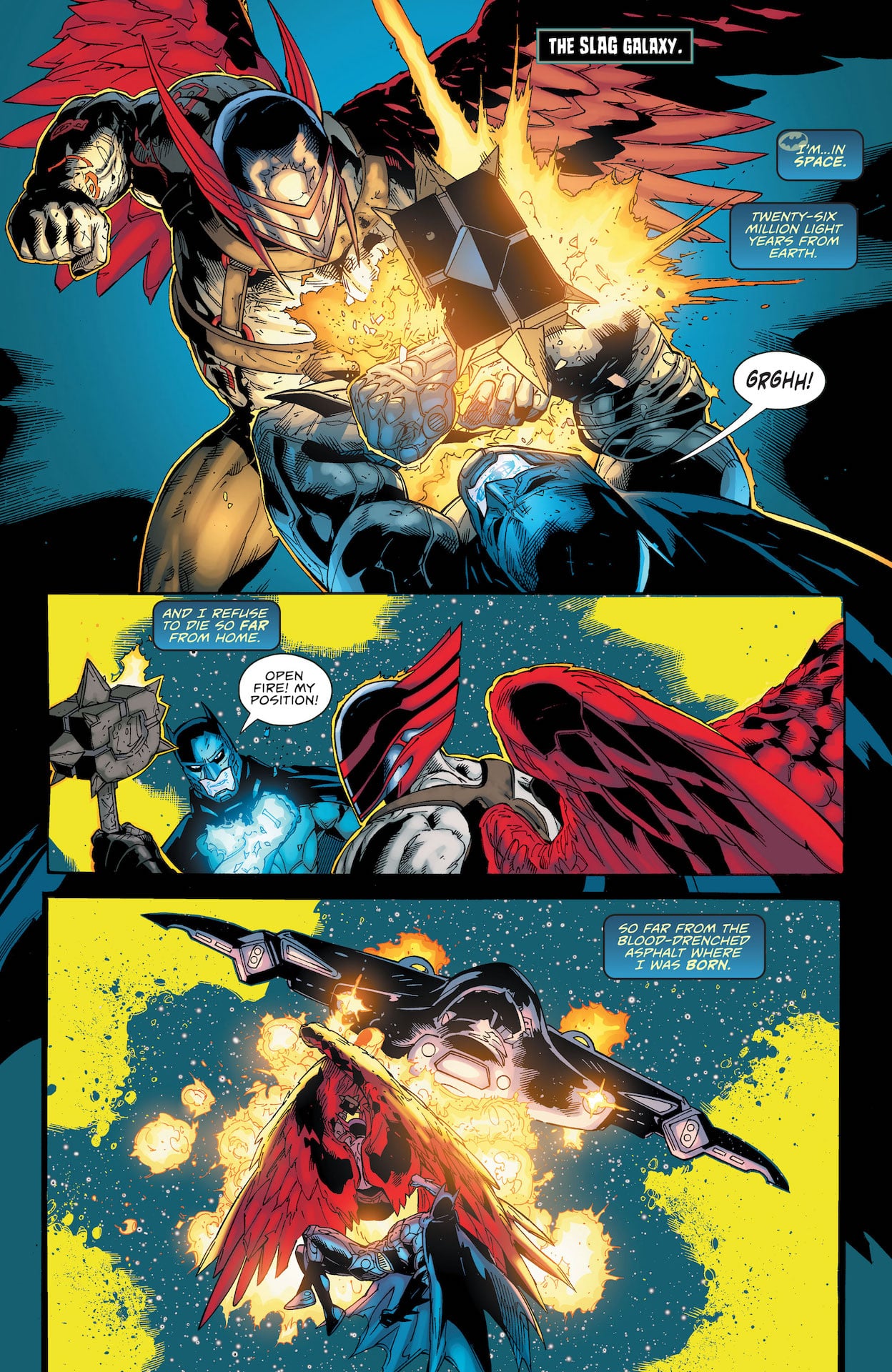
While Bruce is TENS of millions of light years away in the Slag Galaxy – (I am not exaggerating, the comic places this other galaxy 26 million light years away, which makes it extremely close to Earth, in galactic terms*) – just who is patrolling Gotham City? Depending on what’s going on though, some people might not be noticing. (Hear me out…)
The Penguin and the Lack of Batman
As a follow up to the Matt Reeves’ Batman (2022) movie, HBO is now airing The Penguin, a crime drama based on long-time member of Batman’s Rogues Gallery, the eponymous Penguin.
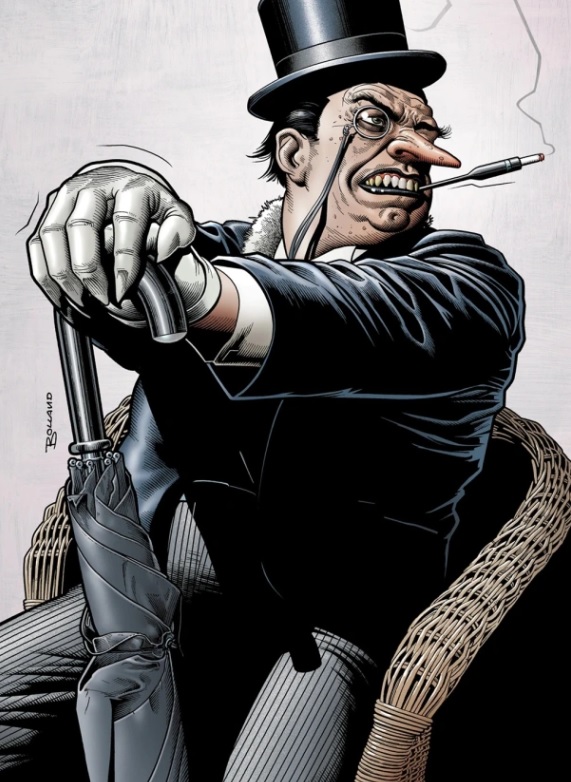
Wait, not the waist-coated, top-hatted Emperor Napolean of Crime figure from the comics, but a more pedestrian gangster/thug character, whose waddling limp has earned him the nickname.
Colin Farrell plays The Penguin, and it’s a fair question about who spent more time in the makeup chair for this role, Farrell as human-looking Oz Cobb –

– or Danny Devito as (human? goblin?) Oswald Cobblepot in director Tim Burton’s Batman Returns.
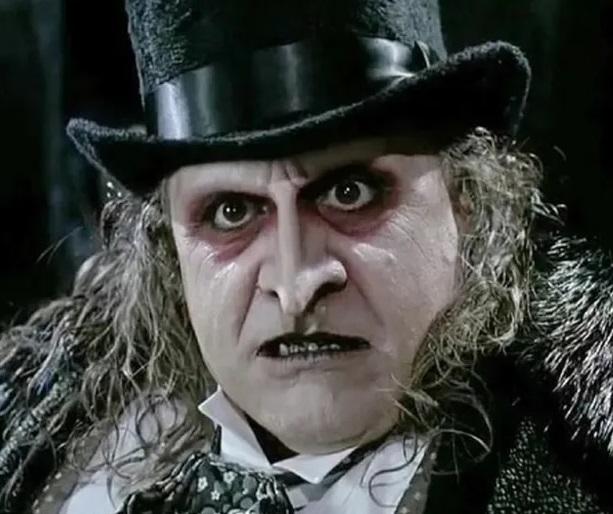
Burton leaned a bit too much into something when making the sequel to his Batman, but I respect that he was being guided by some of the more grotesque versions of the Penguin in the comics. (Or did the movie then inspire a more grotesque appearance by artists drawing Oswald? I could research this, but I’m very lazy.)
The current incarnation of the Penguin is a more beefy version of the TV show GOTHAM‘s Oswald Cobblepot – a low level criminal functionary who rises in prominence in the criminal underworld. Quick aside – GOTHAM featured a Penguin plotline that I first saw in the 1960s Batman TV show – where the known criminal turned his hand to politics and ran for mayor (also a plot point in Burton’s Batman Returns.) HBO’s version of Oz Cobb does not seem to be a likely candidate for mayoral success (but neither had his predecessors.)
A known felon running for political office? Seems like a stretch. (Or does it?)

I don’t want this section to be too much not about Batman, but one aspect I’ve seen commented on in regards to the Penguin TV show is the notable absence of Batman in the first episode. This is the same universe as Matt Reeves’ movie – the show takes place after the Riddler has flooded the poorer areas of Gotham in a Hurricane Katrina-style event. The show’s news makes a point that “the Batman Vigilante” assisted in rescue operations of people trapped in the city’s civic center (or wherever the climax of the movie took place.)
The absence (or so the critic I’m referencing stated) is in how the organized crime figures aren’t even mentioning Batman. They act like he’s not even a factor in their plans due to the shakeup of crime boss Carmine Falcone’s assassination.
I think we should consider that maybe Batman is not as effective at fighting organized crime as we readers think he is. (Also, these criminals have not been reading 80 years worth of Batman comics and might not realize what a big deal the “Batman Vigilante” is.)
Gotham is a large city; Batman is just one man. Organized crime has existed in Gotham City for the entirety of Batman’s fictional career. It’s dynastic. There are established crime families. Batman might represent less of a challenge to their operations than we’d assume, based on their longevity.

This is a topic that gets played out in Nolan’s Dark Knight. In that sequel, Bruce Wayne is despairing that he can’t get closer to his old girlfriend because he has to keep on with the crime-fighting. If only there was a way to clean up the streets of Gotham (without punching everyone.)
Then, Harvey Dent, the crusading and driven district attorney, rounds up most of the crime family kingpins via the use of a racketeering statute. So, at least in the Dark Knight, the legal institutions of Gotham provided a more effective technique of taking on crime.
Bruce Wayne: Now I can retire from being Batman and romance Rachel away from Harvey – he’ll be busy exercising Justice.
The Joker: But wait, I’m doing a performance art crime! And I’ve already blown up Rachel and half of Dent’s face.
Bruce Wayne/Batman: *croaking voice* Dammit.
Anyway, I’m not surprised that the crime bosses aren’t talking about Batman at this juncture on the Penguin show. They’re running drugs and prostitution and the classics of organized crime. They’re not executing wildly dramatic and theatrical antisocial events designed to get Batman’s attention. That’s for the Disorganized Crime elements.
To the Falcone perspective – the Maronis or the Odessa mob might just be more of a worrisome priority. Which should let Oz “Penguin” Cobb rise in the ranks to the point that destiny will bring him into collision with Batman. But for now, it’s okay to have Batman off-screen.
Despite Batman not showing up in the premiere episode of The Penguin – I’m a big fan of the episode (I’ll see more) and am enjoying Farrell’s portrayal.
Bat-Punching Bags
The relatively serious and realistic approach to the Batman universe in The Penguin suggests the final topic for this post: why are people willing to risk broken bones (and lost teeth) to engage in criminal enterprises in Gotham? Who wants to risk that?
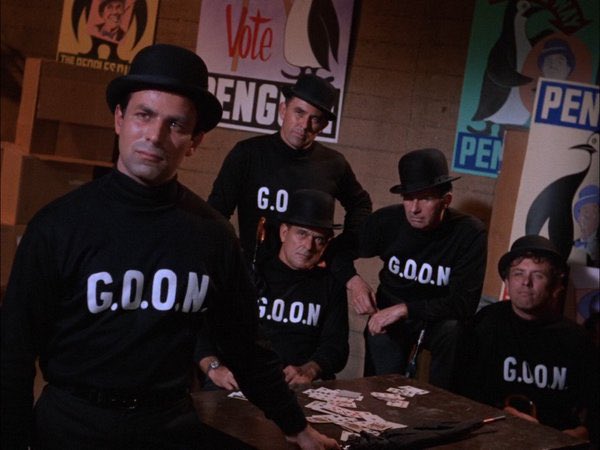
If the organized crime families are willing to operate with the presence of a looming nightmarish vigilante, it’s understood that they need considerable muscle for their operations. But that’s true even without Batman. The career as a henchman or goon carries risks as the cost of doing business. In the first episode of the Penguin, Oz is in his supervisory role in a drug lab and his crew brings in an injured (probably dying) colleague who’d been ambushed by another criminal element. Everyone takes this in stride, this is a more realistic and likely threat than the early-career Batman – and they roll with that punch. Again, the type of operations being done by the criminal enterprise aren’t really meant to attract bat-involvement. Unlike the Riddler, the Falcones aren’t telegraphing their crimes.
But why would people sign up for the more outrageous criminal operations? Why work for the Riddler, or the Joker who is just as likely to murder his own men and would be no less delighted if his wild performance crimes were thwarted because that would also be entertaining for him?
Working for the mob is one thing. Working to advance the aims of someone who is trying to achieve very personal goals with little regard to what happens to the folks who support them is another thing entirely.
Not everyone in the Gotham underworld can be hardcore fanatics, like Ra’s Al-Ghul’s assassins, or be hardened criminals with skills that can only place them for employment with the crime families (or possibly the GCPD.) Some folks might just be folks down on their luck, with understandable motivations that have been leveraged in some way and channeled to ludicrous ends by the more extreme members of the Rogues Gallery.
The situation in Gotham must be so desperate, so unpleasant, that folks are willing to sign up for all kinds of wild schemes if they think there’s a chance that they can get some benefit. We can charitably consider that some of them were tricked by the charismatic nature of the villain, despite the scoundrel in question having been proved a liar or an untrustworthy clown in the past.

A part of these folks might be so delusional that they just want to believe that This Time it might be different, and they’ll somehow end up on top.
Of course, this is safely fiction. A classic Batman criminal simply needs a cadre of goons and patsies for their outlandish schemes, and the plot moves on. Maybe we don’t have to think too much about it.
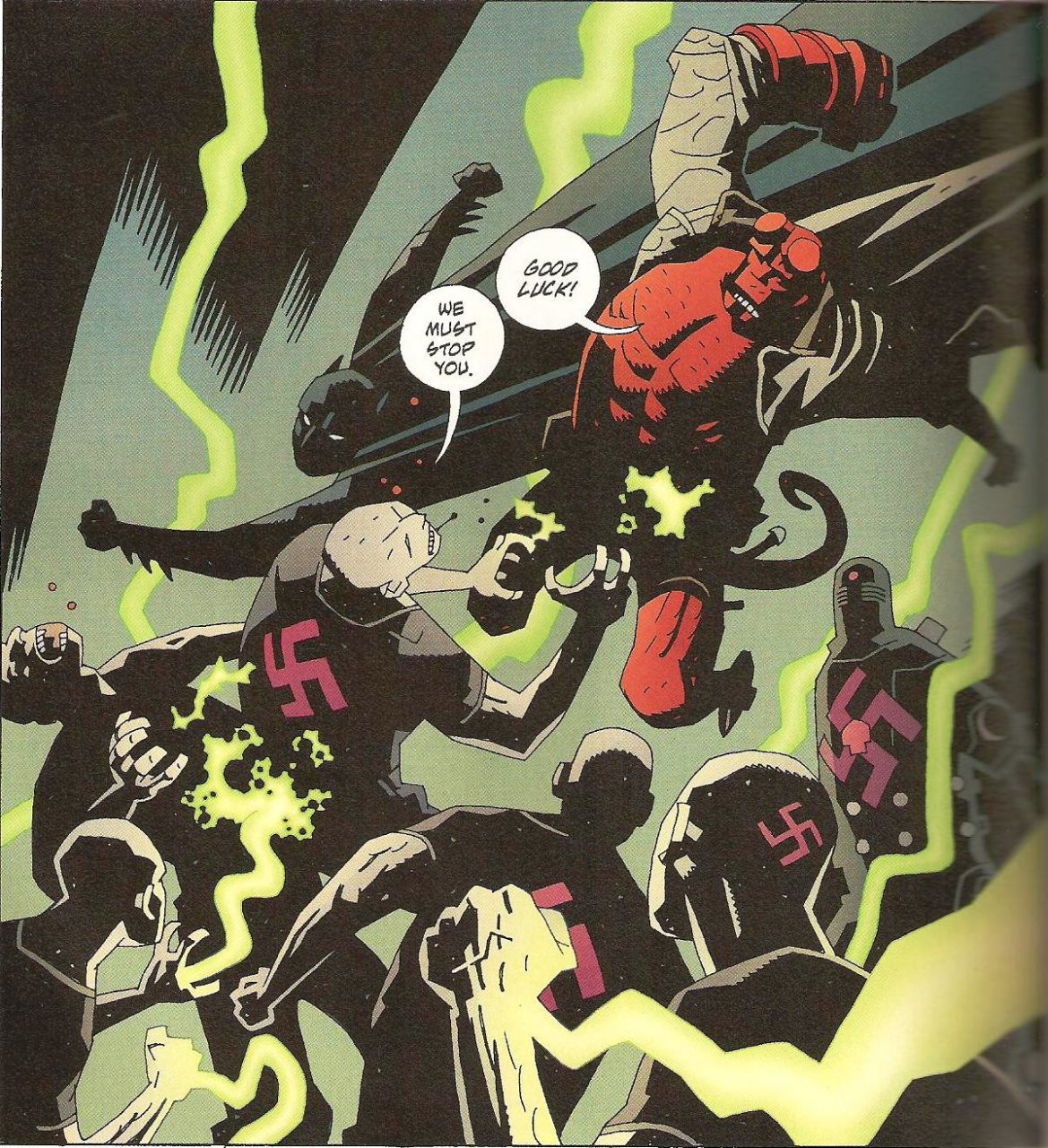
Until it isn’t fiction so much.
*26 million light years is about 4.5 times further than Earth than our nearest neighboring star, just 4 light years away. The Slag Galaxy is ridiculously embedded in our own galaxy then.
Images are variously from Batman and Detective Comics, as well the movies: Batman Returns and Batman (2022), the animated Harley Quinn, and The Penguin, both available on HBO Max. Image of Hellboy is part of some Batman/Hellboy teamup by Mike Mignola. Obviously, Batman and his image are owned by DC Comics/Warner Brothers.
I make no claims on any of the images, but some claims on the text here. So there.
For the record, Batman is fictional, and I used to think his Rogues Gallery was fictional.
© Patrick Sponaugle 2024 Some Rights Reserved
 I Can't Possibly Be Wrong All the Time
It was interesting listening to Colin Farrell on The Graham Norton show describing the makeup process..https://youtu.be/FjgI-dVgun4
LikeLiked by 2 people
Peter, thank you for sharing that! I’ll check it out.
LikeLiked by 1 person