HBO has recently finished up a season of its latest A Song of Ice and Fire offering, A Knight of the Seven Kingdoms.
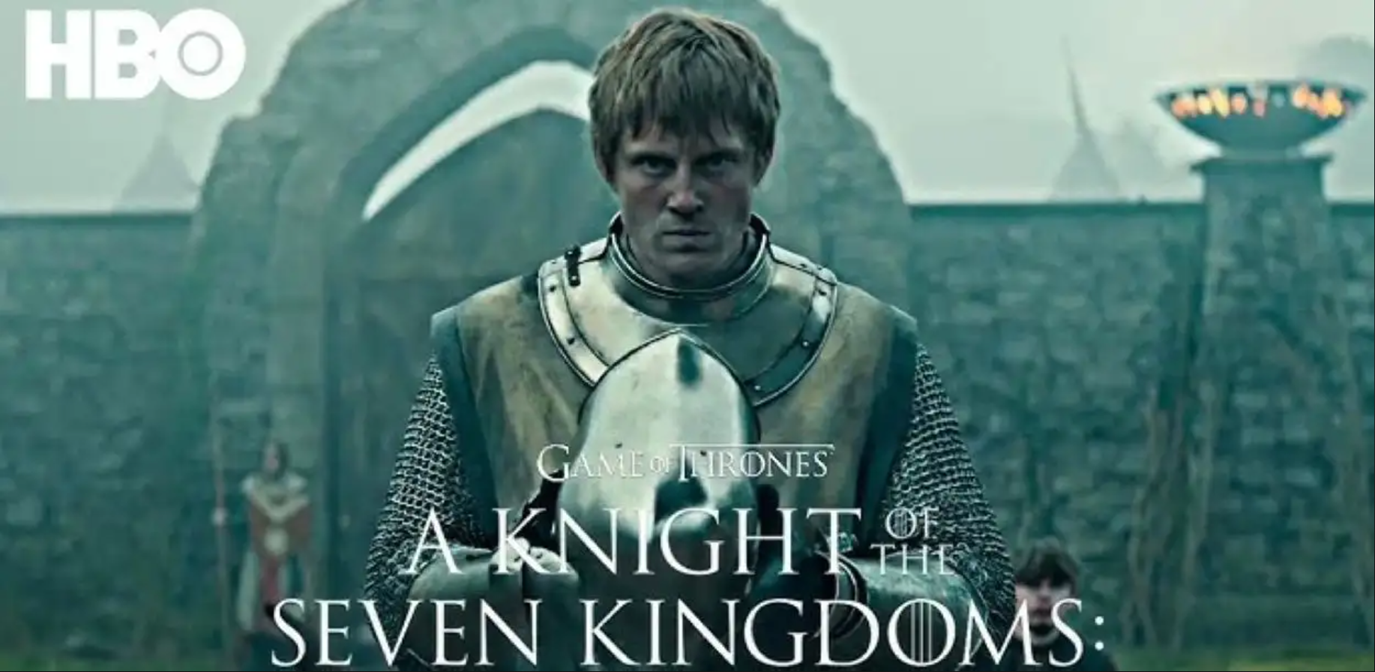
The six-episode season largely covered the events told in The Hedge Knight, the first novella from George RR Martin detailing the adventures of Ser Duncan the Tall and his diminutive and bald squire Egg. There are three written novellas of Dunk and Egg stories, currently collected in a single volume called A Knight of the Seven Kingdoms. I recommend it as reading material for anyone who would like to enjoy some stories that are set in Westeros but that aren’t quite as grim (for various levels of grim) as the narrative that kicks off in A Game of Thrones.
I used to blog heavily about Game of Thrones and slightly less-heavily for House of the Dragon. I won’t make any promises on insightful content, but I do want to write some essays over the next few months about A Knight of the Seven Kingdoms, and a reasonable place to start is with the end of the final episode. (Look, I do what I want to do. Anyone can start writing about the beginning of things…)
A Knight of the Seven Nine Kingdoms
At the end of the final episode of the first season (spoilers for this show – Dunk and Egg are off riding together, which is not a surprise because there are two other written novellas of their Mandalorian and Grogu/Lone Wolf and Cub style adventurings to come…) Ser Duncan is trying to decide where he and his squire should be off to. (From now on, I’ll just refer to him as Dunk.)
Egg: Where are we going, ser?
Dunk: Don’t know. I suppose we could go anywhere in the Seven Kingdoms, though I’ve never been to –
Egg: Nine.
Dunk: What?
Egg: There are nine kingdoms, ser.
Dunk: Of what?
Egg: Of the realm.
Dunk: -heh- Are you mad?
Egg: Is that relevant?
Dunk: There are seven kingdoms of the realm, boy. Everyone knows that.
Egg: Then everyone is wrong.
Dunk: Do you want a clout in the ear?
Egg: Crownlands, Westerlands, Stormlands, Riverlands, the Iron Islands, the North, the Reach, the Vale of Arryn, and Dorne.
Dunk: No, but – uh –
— A Knight of the Seven Kingdoms, Season 1 Episode 6
Dunk looks stunned after being soundly “Well, Actually’d” by his well-educated geographically aware squire.
The show then (after a lovely visual of Dunk and Egg riding off into the distance) faded to black and had the show’s title altered to say A KNIGHT OF THE NINE KINGDOMS.
The show is not changing its name, this is likely just a joke from the showrunners, because the label of Seven Kingdoms has always been kind of tenuous in its description of the regions controlled by Kings Landing in Westeros.
The Approximately Thereabouts More-or-Less Seven Kingdoms
In the first season of Game of Thrones, King Robert Baratheon is off hunting with his younger brother Renly, tromping through the woods with a spear and theoretically soon encountering the boar that will kill him. King Bob (a notoriously randy fellow) brags about “Making the Eight” – which he describes (I’m paraphrasing here) as having sex with someone from each of the Seven Kingdoms and also the Riverlands to make eight.
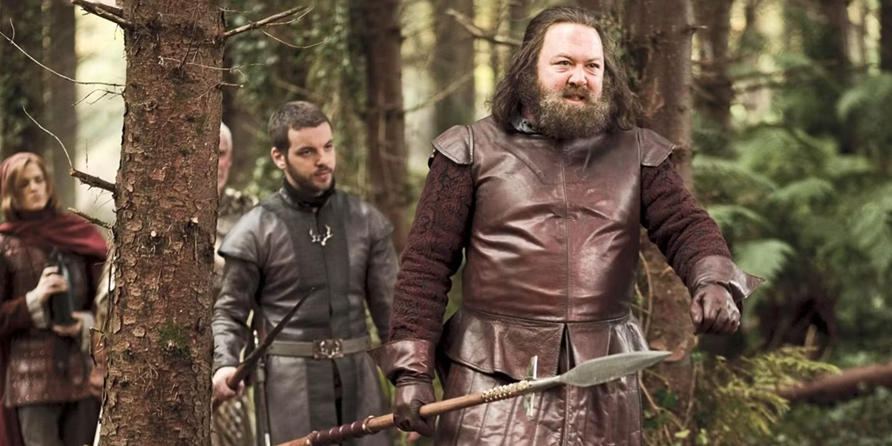
This raises questions! Why is the Riverlands not considered one of the Seven Kingdoms? Why isn’t Robert actually “Making the Nine” by including ladies from the Crownlands in his trysts?
Robert Baratheon: I’ve seen too many girls from Maidenpool. There’s a reason they call that place Maidenpool.
The amorphous nature of the Seven Kingdoms numbering isn’t just constrained to the shows. In A Storm of Swords, as a wedding gift from his future father-in-law, King Joffrey Baratheon receives a seven-sided cup with jeweled sigils for each of the seven ruling houses.
Lord Mace Tyrell came forward to present his gift: a golden chalice three feet tall, with two ornate curved handles and seven faces glittering with gemstones. “Seven faces for Your Grace’s seven kingdoms,” the bride’s father explained. He showed them how each face bore the sigil of one of the great houses: ruby lion, emerald rose, onyx stag, silver trout, blue jade falcon, opal sun, and pearl direwolf.
“A splendid cup,” said Joffrey, “but we’ll need to chip the wolf off and put a squid in its place, I think.”
— A Storm of Swords, Sansa IV
Now wait. Why are the Iron Islands not considered one of the Seven Kingdoms by the artisan who made this cup? The Tully trout from the Riverlands is included there for some reason and the Greyjoy kraken left off.
Robert Baratheon: Maybe I misspoke and Making the Eight is actually having sex with someone from each of the Seven Kingdoms, plus the Iron Islands? Look, as long as I’m getting laid, I don’t care.
The Historical Seven
I’ve heard it explained that the reason for calling Westeros the Seven Kingdoms is because when the original Aegon Targaryen conquered the land, there were seven kings (well, six kings plus a princess ruling Dorne.)
- A Stark ruling the North
- An Arryn ruling the Vale of Arryn
- A Gardener ruling the Reach (no Tyrell in charge yet…)
- A Lannister ruling the Westerlands
- A Martell ruling Dorne
- A Durrandon ruling the Stormlands
- A Hoare from the Iron Islands ruling the combined expanse of the Iron Islands and the Riverlands. (This was Black Harren, who built Harrenhal.)
That’s seven. The Riverlands at that time were conquered territory ruled by Ironborn, and the Crownlands didn’t quite exist as such – the area that would be eventually known as the Crownlands was disputed territory claimed by the Stormlands and also by the occupying Ironborn force in the Riverlands.
This historical listing isn’t quite perfect. Aegon doesn’t conquer Dorne during the conquest. The southernmost kingdom resisted all attempts to be definitively conquered and assimilated by the Targaryens for something like 150 years. It’s even still its own independent non-affiliated entity during the time presented on House of the Dragon. So why call it Seven Kingdoms at the outset if it is just six (unless we count the Riverlands and the Iron Islands – when there seems to be a preference not to…) ?
ANYWAY, it does seem to cast some doubt on young squire Egg’s assertion that there are nine kingdoms in the realm of The Seven Kingdoms.
Okay, we’ve had some groundwork on the number of named regions that fall under the umbrella term The Seven Kingdoms. That leads us to a burning question of critical import.
A BURNING QUESTION OF CRITICAL IMPORT
At the end of Game of Thrones, during a Great Council (it didn’t seem that great, based on the limited attendance) held in the ruins of the Dragonpit – Tyrion Lannister pitched to the assembled nobles that Bran Stark should ascend to the Iron Throne [FOR REASONS], as monarch over the Seven Kingdoms. Apparently not wanting to make a disabled spooky kid feel bad after he’d come all that way, the amiable lords shrugged and agreed. All except Bran’s older sister, Sansa Stark, who lobbied that the North – with very reasonable grievances about being ruled by folks living south of the Neck – should be its own independent kingdom. Kind of like Dorne used to be back when Aegon was claiming that it was actually one of his kingdoms.
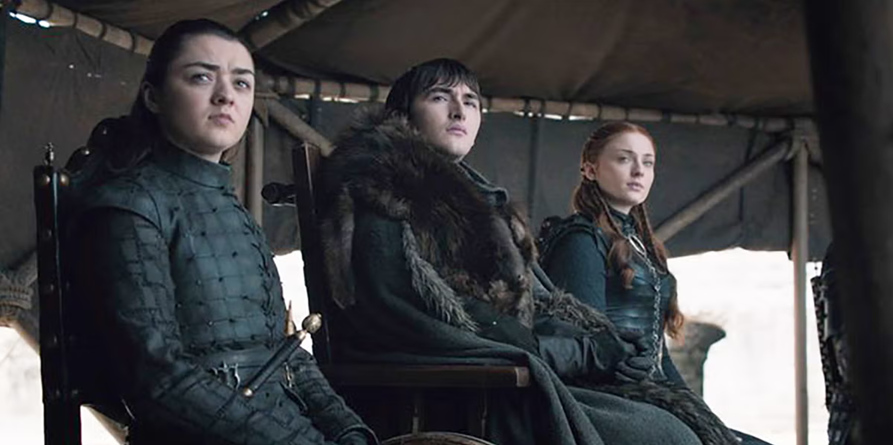
(The prince of Dorne who was in attendance must have been dozing, since he also didn’t take the opportunity to have Dorne secede as well.)
Bran did not argue against this condition of Northern independence for him to receive the crown.
We don’t actually see Bran get coronated but we know he’s the king by the end of the show and we see Sansa Stark crowned Queen in the North in the last shot of the show.
Here’s the question that I want to be considered: Is Bran Stark the King of the Seven Kingdoms? Let’s hear from the experts:
Math Maester from the Citadel: Well, no. He’s now the King of the Six Kingdoms. That’s just math.
King Aegon “Egg” Targaryen: Wrong. He’s now the King of the Eight Kingdoms.
Before we definitively answer this, let’s put this out as a poll so everyone can weigh in:
Regardless of how you voted, I believe it is clear that Bran is the King of the Seven Kingdoms. Why? I have several reasons, any of which can work.
- The fact that there is some fluid listing of the seven kingdoms during King Robert’s time, where maybe the Iron Islands are left off, or maybe the Riverlands are left off, implies that no one is that overly concerned about the actual number. Seven as a number holds power because of the Faith of the Seven. For branding reasons alone, there is value in sticking with the same label. Much like the Holy Roman Empire had very little to do with Rome, and everything to do with the Hapsburgs ruling from Germany or Austria or Hapsburgia (I’m more up on the specifics of Targaryen incestuous history than I am on the Hapsburg incestuous history…)
- Even if we want to be sticklers and suggest that the number of “kingdoms” in the Seven Kingdoms should equal seven if Bran is to remain King of the Seven Kingdoms, since the Riverlands at one time did have kings (the Mudds ruled from Oldstones – a place made famous by Jenny of Oldstones and her song), it can absolutely be considered a kingdom and people can just take their seven-sided chalices and make sure there’s a squid and a trout but no direwolf sigil, and it’s all good.
- Finally – since Dorne seemed to be considered one of the Seven Kingdoms when King Aegon I declared his kingship, and Dorne was totally an independent state at the time and remained so for nearly two centuries, it seems there’s a precedent for Bran Stark to continue to insist that the North is still part of the Seven Kingdoms, even if it seceded.
Bran Stark: To quote my fellow monarch, George III from Hamilton, An American Musical – “You’ll be back.”
After all, Bran is a Stark and was next in line for the King in the North title before Sansa could make claim to Queen in the North. (Folks wanting to argue about Robb Stark’s will nominating Jon Snow as successor, I hear you. But that legal document was written using the incorrect foundation of Bran being believed dead, and besides temporary King in the North Jon Snow had been sentenced to the Wall as part of the events of the Great Council and we all remember that members of the Night’s Watch must wear no crowns.)
Jon Snow: Unless I die again, and then my watch would have ended. (Again.)
So I would not be surprised if Bran had as his titles King of the Seven Kingdoms and King in the North, if he was so inclined to do so. (Sadly, we did not see the coronation ceremony.)
Wrapping Up
Egg’s assertion to Dunk that there were nine kingdoms in the Seven Kingdoms honestly sounds like him complaining about getting a question wrong on a geography test. Or that Egg is just being overly pedantic.
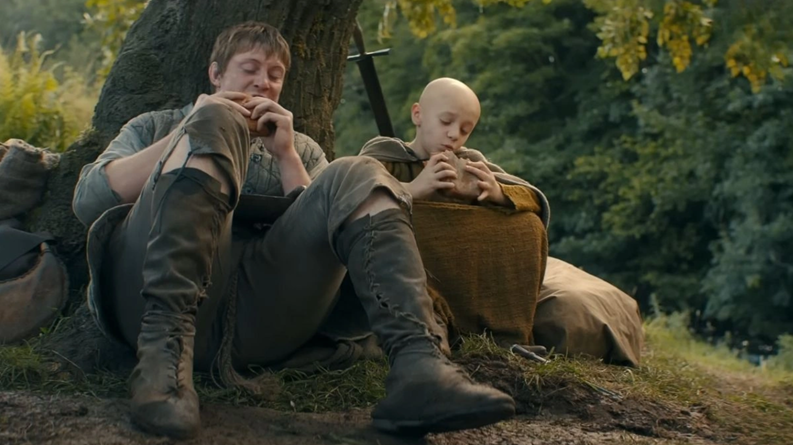
Egg: People calling French Fries “French” fries are wrong. They originated in Belgium. People calling Panama Hats “Panama” hats are wrong. They originated in Ecuador. There’s aren’t fifty states in the United States – there’s forty-nine -Virginia is a Commonwealth!
Dunk: WHAT THE FOOK ARE YOU GOING ON ABOUT? Seven hells.
Egg: Nine hells, actually.
(Comments are always welcome. Super welcome! But if you want to talk spoilery Game of Thrones talk with me (also welcome) I’d invite you to visit my Safe Spoilers page on my backup blog. That way my non-book-reading friends won’t be shocked with foreknowledge.)
Images are from HBO’s A Knight of the Seven Kingdoms and HBO’s Game of Thrones. I make no claims to the images, but some claims to the text here – at least the text that isn’t my transcription of show dialogue or text from the novel A Storm of Swords. Pretty much everything else is mine. So there.
If you liked this article, thank you! I have all of my Game of Thrones related articles on my handy-dandy Game of Thrones page should you want to read more but don’t want to navigate around my site.
© Patrick Sponaugle 2026 Some Rights Reserved
 I Can't Possibly Be Wrong All the Time
It’s always fun to read your thoughts on those world! I really enjoyed Knight of the Seven Kingdoms and its lighter tone, it’s definitely more of what we need in this time. I am finally getting around to reading the A Song of Ice and Fire as well. Obviously I loved the Game of Thrones show but reading at the same time felt too repetitive for me… but now it’s fun to go back and read the story. It makes me appreciate what a faithful adaptation the show was in the beginning!
LikeLiked by 1 person
Ashley! What a joy to hear from you – I hope you’re well. If you knew how little Elden Ring I’ve finished you’d laugh at me.
It is great that you are reading A Song of Ice and Fire – I do love the show but they omitted a lot of complicated and compelling stuff. I’m glad that you’ll get to experience that
LikeLiked by 1 person